SYNTHETIC MENISCULAR IMPLANTATION
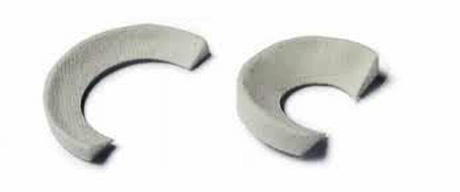
Synthetic meniscus scaffold
In previous years until today, partial or subtotal meniscectomy was the only solution for meniscal tears.
However, removing part of the meniscus is essentially removing an important protective factor of the articular cartilage, causing premature wear of it for two reasons:
• it creates the development of large focal forces between the femoral and tibial cartilages at the point of the meniscus defect and
• it develops a greater and paradoxical movement of the bones between them.
Although suturing of meniscus lesions is the preferred treatment, this is not always possible, especially for
damages to its peripheral avascular part.
For these irreparable lesions, partial meniscectomy is the current standard treatment. This involves removing the unstable portion and shaping the contour of the remaining meniscus. Preserving as much of the meniscus as possible is undoubtedly the goal.
The development of the biotechnology of synthetic grafts as well as the perfection of arthroscopic techniques and tools, has given the opportunity today to specialized Orthopedic Surgeons to perform meniscal transplants (synthetic or allografts) thus restoring the deficit left by the resection of the meniscus, avoiding premature wear and the development of osteoarthritis.
After long-term research and with the collaboration of leading experts, the synthetic meniscus scaffold was created, which is the next step in knee surgery.
The synthetic meniscus is made of collagen or a synthetic biodegradable polymer that, with its special cellular arrangement, allows blood flow into its interior, providing sites for the growth of new cells, creating conditions for the healing process and the creation of new meniscal tissue.
After the removal of the damaged part of the meniscus, the synthetic scaffold is placed with absolute precision and sutured using special techniques. Over time, new tissue grows through the scaffold, gradually replacing it. The scaffold is absorbed by the body and in its place there is now a new meniscus.
THE ADVANTAGES OF THE METHOD ARE:
• normal range of motion of the joint
• pain-free movement of the joint
• prevention of the development of premature osteoarthritis
Clinical studies in humans have shown an improvement in their quality of life as well as a return to the pre-injury state of health of their knee.


